About the studio · Kintnersville, PA

Most brand videos die because a stranger edits a story they were never in the room for.

Halloran Films is built around the opposite bet: the person who asks the questions is the person who cuts the answers. One set of ears from the first phone call to the graded master — which is why the film still sounds like the founder when it's done.

Since 2019One director-editorGraded & mixed in-house
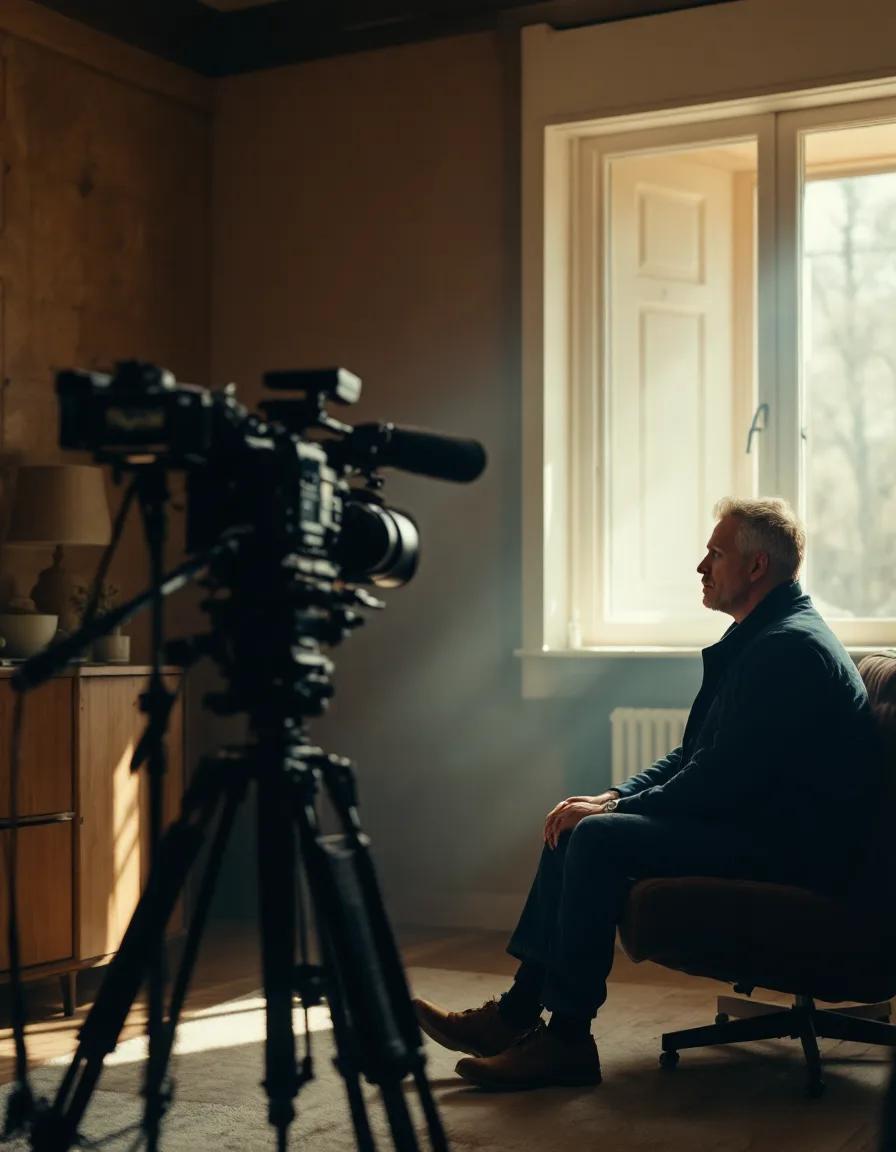
The filmmaker behind a cinema camera in a sound-treated interview room, lit by soft window light 00:00:00:14

01 — How this started

The studio began with a founder who hated her own origin video. It had drone shots, a stock-music swell, and a voiceover written by someone who'd never met her — a sizzle reel wearing a documentary's clothes. We rebuilt it the slow way: a two-hour interview, a transcript marked up line by line, and an edit cut from the sentences she actually said.

That became the method. We don't start from a storyboard or a shot list — we start from a question bank built off your deck, your hiring page, and your customer list, and we let the interview decide the film. The edit is a paper edit first: we find the three or four lines that carry the whole story before a single clip touches the timeline.

Everything after that exists to prove those lines. B-roll of hands, product, floor, and light; a color grade that matches the room instead of a LUT preset; a sound mix where the room tone sits under the voice instead of fighting it. By the time a master ships, nothing is decorative — every frame is load-bearing.
02 — What we hold to

Four positions we won't argue out of.

  1. 01

    The transcript is the edit

    We don't light a scene until we know the sentence it has to prove. Structure comes from what was said, not from a template timeline — so the story can't drift into a montage with no spine.

  2. 02

    No handoff, no translation loss

    The same eyes run the interview and the timeline. There's no editor reverse-engineering intent from notes — the person who heard the pause knows which take to keep and why.

  3. 03

    Camera-original stays with you

    At delivery you get the graded master and every 4K frame on a drive you own. No footage held hostage, no re-licensing fee the next time you need a fresh cut two years on.

  4. 04

    One shoot, every surface

    A single story edit becomes the ratios each channel needs — 16:9, 1:1, 9:16, a 90-second deck cut, captions burned-in and as sidecar SRT. We shoot once and feed the website, social, and the investor room from it.

03 — What's in the case

The kit, for the people who ask about the kit.

You don't need to read this to hire us — but founders who shoot themselves usually want to know exactly what walks through the door. Here's the standard interview rig.

Capture
Two full-frame cinema bodies recording 4K at 24fps — a wide master and a tight single, so we never cut to the same angle twice.
Glass
Fast cine primes for the interview and a parfocal zoom for B-roll — shallow depth of field that keeps the founder off a busy background.
Sound
A lavalier plus an overhead boom into a field recorder, with room tone captured separately so the mix has something clean to sit on.
Light
A soft key, negative fill, and a hair light — rigged to match your room's windows rather than flatten them, so the grade has real color to work with.
Post
Graded and mixed in-house — a full color pass, dialogue leveling, and both burned-in and sidecar SRT captions, all under one roof in Kintnersville.
Delivery
Masters in every ratio you need plus the full camera-original archive, handed over on a labeled drive you keep for good.
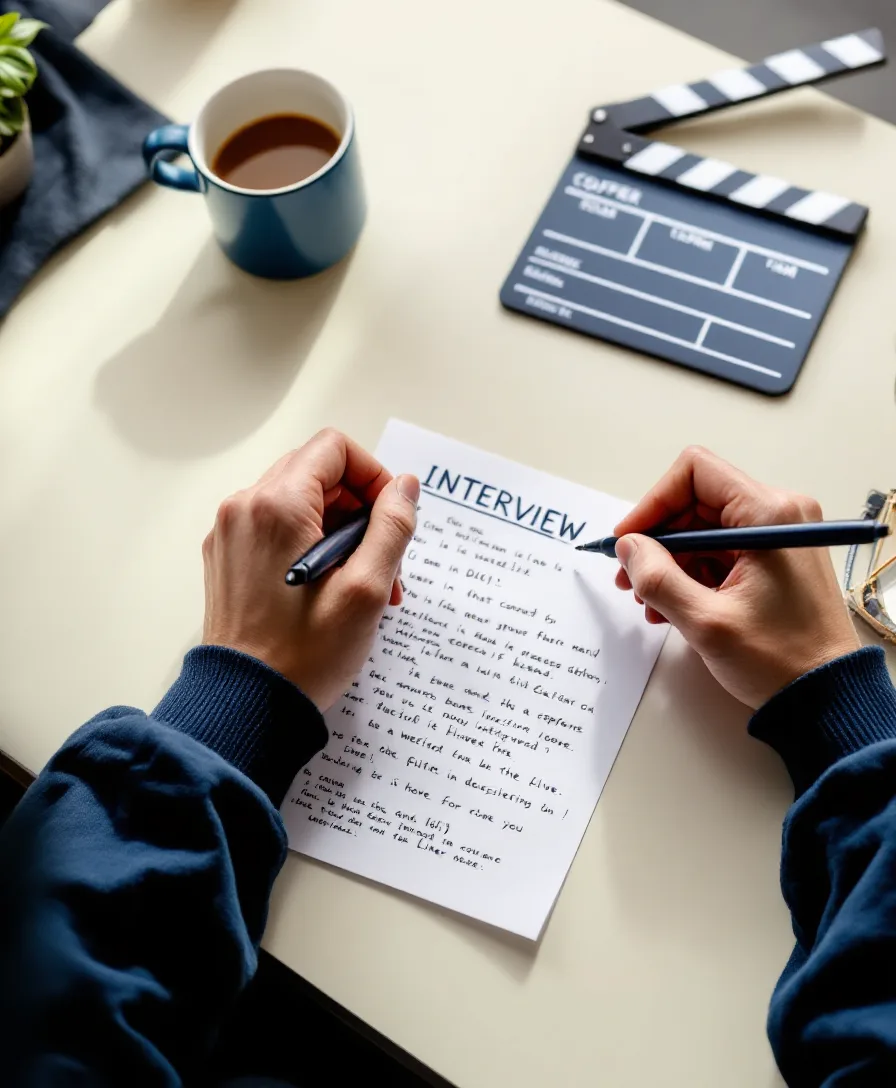
Hands marking a printed interview transcript beside a clapperboard on a warm cream desk

04 — Who you actually work with

Small on purpose. You get the whole studio, not a seat on a roster.

Halloran Films stays a one-director-editor operation by design. When you book a shoot, the voice on the first call is the one holding the camera on shoot day and the one marking the transcript in post. A small B-roll and sound crew joins for larger shoots, but the story stays with one person end to end.

That keeps the schedule honest — we take a limited number of projects a season so none of them get the assembly-line treatment. If a film needs another day to land, it gets another day. If it's done in two, we won't pad it.

— Working out of 573 Haycock Run Rd, daily 10am–5pm

See the project tiers

Ready to put your origin on a timeline?

Start a brief Call studio